Thursday, February 26, 2015

This tree bears fruits or "Gulab jamuns"???


Ranchi, Jharkhand-
It might be difficult to believe but residents of Lohardaga claim that a tree in the region bears a unique fruit. According to locals 'gulab jamuns' grow on the tree.


The tree belongs to 65-year-old Gautan Bharti. The tree starts flowering from Feb to March. The fruits, which are large berries, develop by May or June. The fruit is pinkish when young, changing to a leathery, glossy dark green with a yellow midrib as it matures. As the number of people consuming these 'gulab jamuns' are increasing, the price is rising too. This year, Bharti sold 'gulab jamuns', ranging from Rs 100 per kg to Rs 150 per kg.

According to a report in Dainik Bhaskar, this fruit tastes exactly like the one you get at the neighbourhood sweet shop. The only difference is it doesn't come with a special packing.

Source: network18


Sunday, November 17, 2013

Kartika Purnima... Bon voyage to the legendary seafarers of Kalinga!


Bhubaneswar, Odisha- The rise and fall of the maritime activities and the ports of Odisha had been inextricably linked with complicated twists and turns of coastal geomorphologic forces. In the maritime history of Odisha, the fortune of Kalinga Sea-farers ebbed and flowed with ever-shifting sands of Eastern Sea coasts. Countless historians have tried to reconstruct this fascinating story from various sources as given below.


1. Legends and Puranic Anacortes.


2. Historical accounts of Travelers.


3. Archeological remains.


However, the story of Odishan ports, the tales of the daring marine conquests of the people and seafarer of different times, at best, remains hazy, thanks to the many apparent contradictions and inaccuracy of these sources and the lack of availability of authentic data.

Legends:
The legends and festivals of Odisha indicate the prosperity of maritime trade that flourished in those times at these ports and the contribution it made to the overall economy of the region. The Kartika Purnima festival observed in the Autumn Season is a pointer to this. On this day, early in the morning, people of Odisha make small boats out of the banana-trunks and sail to them in the nearest water body amid melodious chants in a symbolic remembrance of those times when the people of Odisha used to observe this festival to celebrate the home coming of Odia Sadhabas.

In those days, marine architectural science was not developed and any vessel has to navigate completely with the wind and by a clever Manipulation of the attached sails. The Odia sailors used to set sail towards Java, Sumatra, Indonesia and Malay, taking advantage of the wind which flows in the North Easterly direction from Mid October to February. The ideal moment for such a voyage was full moon night of Kartika month. In early morning of this day the seacoast of different port cities of Odisha used to reverberate with the sound of thousand conch shells blown by the wives of these indefatigable sailors whose sail would gradually fade into the horizon in search of trading prosperity at distant lands.

The symbolic floating of banana boats observed on this day is a faint reminder of the maritime superiority once enjoyed by the People of Utkala in the high of East-Asian archipelago.


Odisha, in those days, enjoyed a unique geographical advantage. It had a long coastline and numerous rivers criss-crossing its vast expanse, which were highly navigable well into the innards of their hinterland. Some historians are of opinion that these rich port cities and the flourishing trade of Kalinga with most of the East Asian countries through its long coastline and deep navigable rivers could have actually served as the main reason for attack of Ashoka in 261 B.C.

It is a well-known fact that the Kalingans had mastered the sea well before the times of Ashoka. Greek traveler Meghasthenes mentions of trading relation of Kalinga with China in his memoirs. In his memories Meghasthenes writes about the elephant trade between Kalinga and Sinhala even in the first century A.D.

One can well imagine the kind of robustness of the ships which were capable of carrying hordes of elephants over such long distance braving the vicissitude of the mighty waves of Indian Ocean. The existence of such ships also indicates the prevailing technological advance required in ship building and the manufacturing of their spare parts. As per the Greek Historians, there were five important ports at that time from where trade and colonial relationship with the countries of Far East was being attempted.

In the first century A.D. Ptolemy’s geography mentions the following ports.

1. Nanigen (Present Puri)

2. Katikardam (Cuttack)

3. Konagar (Konark)

4. Koshamaba (Balasore)

5. Kalinganagar (Toshali)

In the Buddhist era some other ports like Tamralipta, Palore (present Palur near Chilika) rose to prominence. In the third century A.D., Mahendra & Sanghamitra –son and daughter of the great Ashoka- sailed from the Tamralipta port to Singhhala (Present day Sri Lanka) along with Bodhisakha for spreading Budhhism.

In the third century A.D. from this very same port, the daughter of the Kalinga emperor Grihasiva-Hemamala and his son-in-law -Dantakumar, sailed to Sri Lanka carrying the “Holy Tooth of Budhha”. The temple containing this “HolyTooth” in present day Srilanka is still great place of pilgrimage for the world Buddhist Community.


In the fourth century A.D. Fahien, the great Chinese traveler went from this TanvaIipta port to Sinhala and then returned to his own country aboard a Kalingan Ship via Java. So important was the prosperity of Kalingan-Sea-traders that the great poet Kalidas describes Kalinga King in his epic “Raghubansa” as Mahodadhipati” or the “Emperor of the High Seas”.


The fame and fortunes of Kalinga traders of the Eastern seas rose to such dizzy heights that the astonished tribals of the Eastern Archipellago used to think them as “Messengers from Heaven”. No there exists no archeological remains of those giant seaports that dotted the once enviable Odisha Coastline.

There exist almost negligible remains of the rich and industrial hinterland that fed these busy seaports. The silent waves, the marauding sand and the brutal marine sources had joined hands with the inexorable march of history to wipe out any vestiges to their existence. But the story has to be told and with exact details. The drama of the period of marine history needs to be unfolded. It requires multidisciplinary research and the concerted efforts of Historians marine architects and ecologists towards reconstructing the history of that period.


Source: Dr. Ms. Sanghamitra Pati saihp.org.in

Wednesday, October 16, 2013

InDiA Vs pHAiLiN


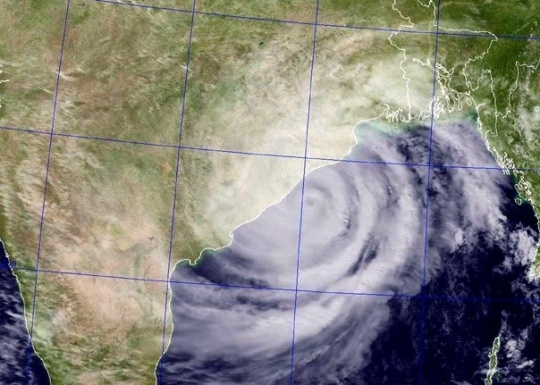
As meteorologists warned last week of a monster storm ploughing towards India's east coast, the country's  disaster preparedness teams snapped into action, pre-positioning emergency response teams and supplies, and evacuating nearly a million people - ultimately saving countless lives.

Cyclone Phailin, India's fiercest storm in 14 years, smashed into the coastline of Andhra Pradesh and Odisha states over the weekend, flooded swathes of farmland and ripped apart tens of thousands of mud and-thatch homes
When Cyclone Phailin slammed into Odisha and neighbouring Andhra Pradesh with winds gusting at more than 200 kmph (125 mph), India was braced for the worst. A monster storm that hit the very same region 14 years ago had killed 10,000 people. But this time, the death toll was astonishingly low, at the latest count just 21.                                                                                                                      

PhailinEarly warnings which started five days before the storm's arrival, the pre-positioning of food rations and packaged drinking water in shelters, and the orderly - and sometimes forceful - evacuation of close to one million people saved many lives, said aid workers.

As Phailin approached, authorities cancelled the holidays of civil servants during the popular Hindu Dussehra festival, deployed disaster response teams with heavy equipment and positioned helicopters and boats for rescue and relief operations.

Trains and flights were cancelled, roads barricaded and helplines and control rooms set up. Satellite phones and generators were dispatched to the heads of districts to ensure they remained in contact with the state capital.

The army, navy and air force were put on standby, and power and telecoms companies were instructed to be ready to restore damaged infrastructure as soon as possible after the storm.

Efforts to save people's livelihoods were also taken. Specific warnings were given to fishermen not to venture out to sea and to put their boats in safe places, while farmers were advised to harvest their standing crops.
It was a rare moment of relief in this disaster-prone country, one that has already been hailed as a triumph of official heroism and defies the Indian bureaucracy’s reputation for bungling and indecision. “It’s nothing short of a miracle that so many lives were spared. We were expecting the worst, but it just shows that all the time and investment put into preparing for such disasters by the authorities, civil society organisations and communities has paid off,” said Devendra Tak from Save the Children, the international NGO.

Monday, September 16, 2013

Kerela's Onam Oneness...


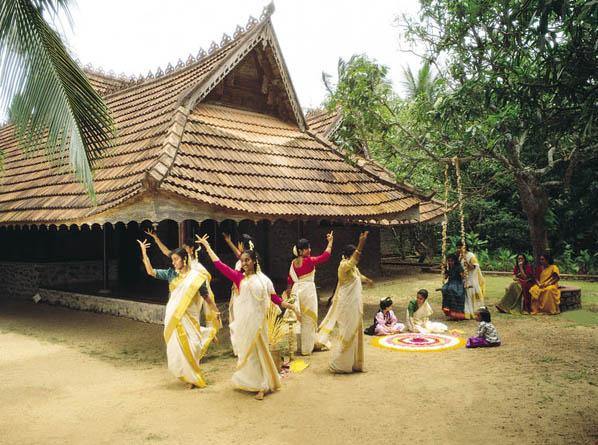
                          Thiruvonam, which marks the culmination of the 10-day Onam carnival,
is just around the corner, and the city's Malayalis seem to be in high spirits about the preparations and                                                              celebrations for this festive season.


Onam (Malayalam: ഓണം) is a festival celebrated by the people of Kerala, India.It is also the Harvest Festival of Kerala with State holidays on 4 days starting from Onam Eve (Uthradom) to the fourth Onam Day. It is also a secular festival, celebrated by people of all religions and castes with the same zeal . The festival falls during the Malayalam month of Chingam (Aug - Sep) and marks the homecoming of the mythical King Mahabali who Malayalees consider as their King. Onam is reminiscent of Kerala's agrarian past, as it is considered to be a harvest festival . Also, it is one of the very few festivals that is celebrated with most number of cultural elements such as Vallam Kali, Pulikkali, Pookkalam, Onatthappan, Thumbi Thullal, Onavillu, Kazhchakkula, Athachamayam etc
The beauty of the festival lies in its secular fabric. People of all religions, castes and communities celebrate the festival with equal joy and verve. Onam also helps to create an atmosphere of peace and brotherhood by way of various team sports organised on the day.
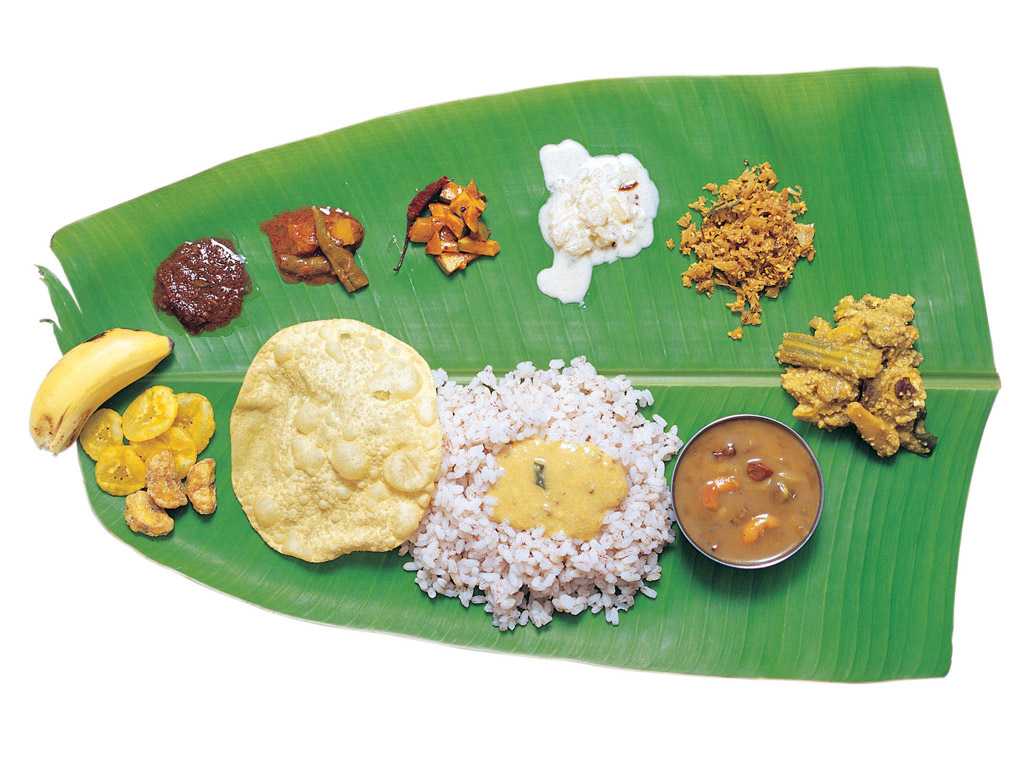
The rich cultural heritage of Kerala comes out in its best form and spirit during the ten-day festival. The central feature of Onam is the grand feast called Onasadya, prepared on Thiruvonam. It is a nine-course meal consisting of 11 to 13 essential dishes. Onasadya is served on banana leaves and people sit on a mat laid on the floor to have the meal
             During Onam, people create a multi-coloured floral decoration on the ground in the front of their home called pookkalam. Young children especially girls are often entrusted with the task of gathering and laying out the flowers in elaborate patterns. Competitions are held on onam day to create this floral design. It is usually 1.5 m in Diameter usually in circular shape. A lamp is usually placed as part of the design. In the recent years, the floral designs have evolved from the traditional circular shape to unique designs depicting different cultural and social aspects of Kerala life.


The Vallamkali (the snake boat race) is another event that is synonymous with Onam. Well-known races include the Aranmula Boat Race and the Nehru Trophy Boat Race. About 100 oarsmen row huge and graceful snake boats and men and women come from far and near to watch the snake boats skim through the water.
During the Onam, Keralite Hindus install an image of Thrikkakara Appan or Onatthappan (Vishnu in the form of Vamana) in their home just as Hindus install images or murtis ofLord Ganesh on the Ganesh Chaturthi festival.
           Many lamps are lit in Hindu temples of Kerala during this celebration.A palmyra tree is erected in front of temples and surrounded with a wooden balustrade and covered with dry palmyra leaves.It is lit with a torch and burned to ashes to signify that Mahabali went to hell as a sacrifice.

Saturday, July 6, 2013

From HeaveN to HeaVoc.....

Uttarakhand :It is often referred to as the "Land of the Gods" due to the many holy Hindu temples and pilgrimage centres found throughout the state. Uttarakhand is mainly known for its natural beauty of the Himalayas, the Bhabhar and the Terai.

The state is known for its endless reasons...


but....
When you change the course of a river by mining, cutting of trees indiscriminately and building roads in a haphazard manner, a calamity is bound to take place,

Nature has unleashed its wrath on Uttarakhand. Hundreds of people have died and thousands are still stranded. It seems, the land of God has turned into the town of ghost. Although official figure of death toll in the catastrophe, caused by flash floods followed by landslides, is placed around 1,000 but in actual, it likely to cross over 5,000. More than 1000 roads, 90 bridges have been washed away in the monsoon mayhem in Dev Bhoomi. Even, the holy shrine of Kedarnath has barely survived, it is buried deep in mud. But question is who is responsible for this catastrophe?

Uttarakhand tragedy, which seems to be a natural calamity, in fact is the man made disaster. Colossal greed of politicians and bureaucrats has eaten up the lives of thousands. The experts say that unplanned development and rampant destruction of forests is the some of the main reasons behind the nature’s fury. Then, unabated construction of hydro-electric (hydel) power projects, roads, hotels have also compounded the problem and made the State prone to such disaster.

Point is, until we will not have any coherent strategy to deal with such a calamity, we will continue to suffer. Many more will be killed if no timely decision is taken.

courtesy: uttarakhand tourism